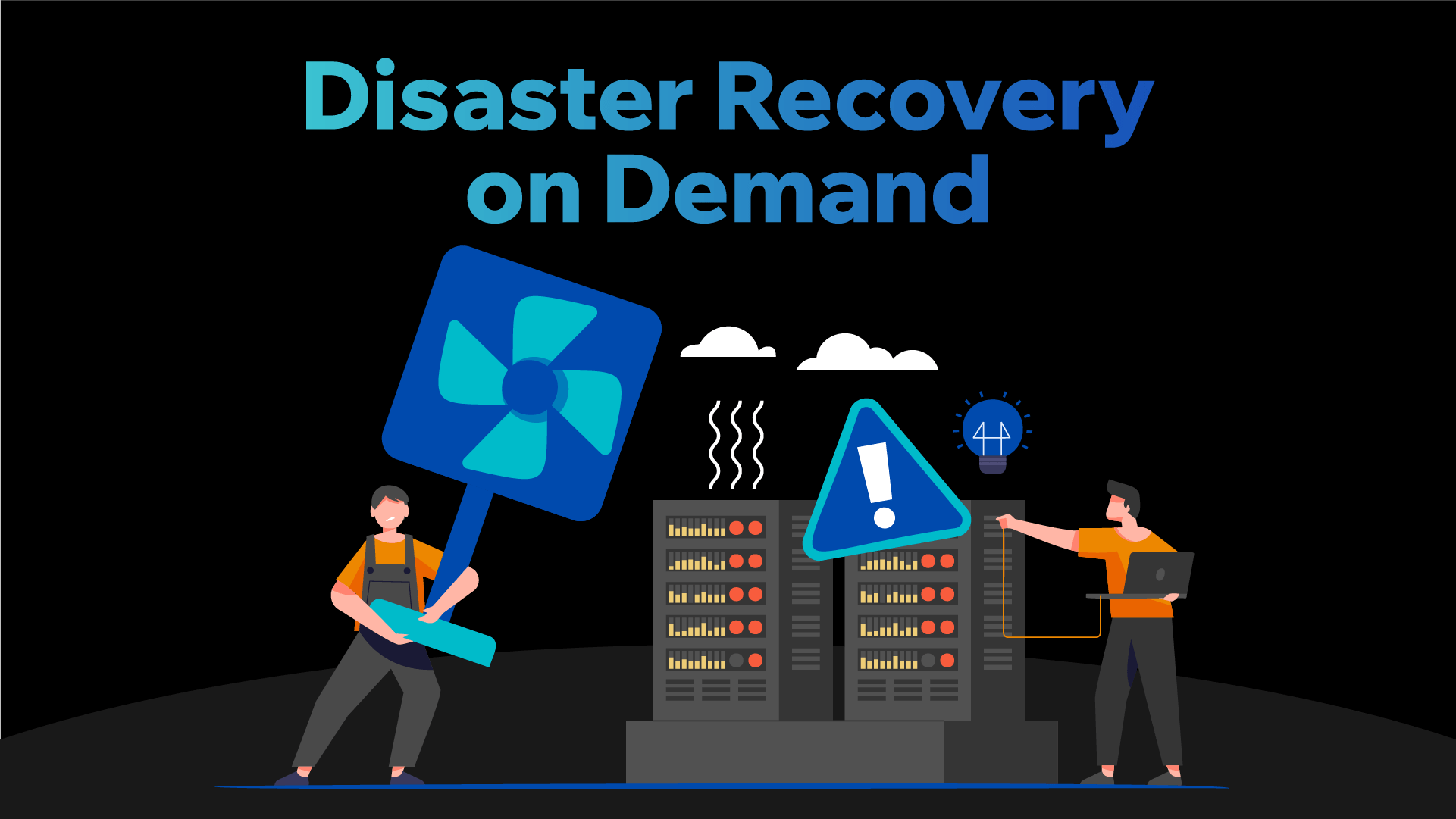
What Is Disaster Recovery On Demand? Disaster Recovery On Demand is a cloud-based service that allows businesses to recover systems and data only when an incident occurs. Instead of building and maintaining a secondary site, companies can activate recovery instantly and pay only when they use it. As a result, organizations reduce operational costs while maintaining reliable business continuity. For digital companies, downtime affects revenue, reputation, and customer trust. Why Disaster Recovery On Demand Is Critical Today Modern IT environments face constant threats. For example, organizations must prepare for ransomware, cyberattacks, hardware failures, human error, and infrastructure outages. Because many business processes depend on applications and real-time data, even a short disruption can create significant financial impact. Therefore, companies without a proper recovery strategy risk data loss, service interruption, and long-term brand damage. Key Benefits of Disaster Recovery On Demand Rapid Recovery As a result, failover can be activated in minutes instead of days. Lower Infrastructure Investment Companies no longer need to build or maintain a secondary data center. Pay Only When Used Moreover, businesses avoid paying for idle resources. Secure Connectivity The environment operates through private connections rather than the public internet. Flexible Scalability Capacity can increase as business demand grows. Enterprise Security and Compliance In addition, the platform is designed to meet strict regulatory and protection requirements. How DCConnect Disaster Recovery On Demand Works The mechanism is straightforward. Data ReplicationProduction systems are replicated continuously or at scheduled intervals. Standby EnvironmentMeanwhile, the recovery infrastructure remains ready for activation. Failover ActivationWhen an incident occurs, workloads immediately run in the backup environment. Business ContinuityUsers can continue accessing services with minimal disruption. FailbackAfter the primary site is restored, data synchronizes back to normal operations. Who Needs Disaster Recovery On Demand? This service fits organizations that rely on digital operations, including financial services, e-commerce platforms, SaaS providers, healthcare institutions, manufacturing, and large enterprises. If systems stop, business stops. For this reason, disaster recovery becomes a core requirement. Disaster Recovery On Demand vs Traditional Models Feature Traditional DR DCConnect DR On Demand Upfront Cost Very high Low Deployment Slow Fast Scalability Limited Flexible Maintenance Internal management Fully managed Recovery Time Longer Minutes Payment Model Fixed On demand Integration with Cloud and Interconnection Disaster Recovery On Demand integrates with public cloud, private cloud, and hybrid infrastructure. Because it runs on secure private interconnection, performance remains stable and latency stays low. Why Choose DCConnect for Disaster Recovery On Demand? Private Interconnection Advantage Unlike many recovery services that depend on the public internet, DCConnect operates on dedicated private connectivity. As a result, businesses gain stable performance, higher security, and predictable recovery outcomes. Built for Mission-Critical Systems The architecture supports high-demand environments such as financial platforms, SaaS applications, and enterprise workloads. Therefore, recovery happens without sacrificing performance. Expert Support During Real Incidents Moreover, experienced engineers assist customers in preparation, testing, and live activation. IT teams do not face disaster situations alone. Maximum Efficiency Without Idle Spending Traditional models require large investments in infrastructure that might never be used. With DCConnect, cost appears only when recovery runs. Multi-Cloud Ready In addition, organizations can integrate with AWS, Azure, Google Cloud, or private environments smoothly. Located in Strategic Data Center Ecosystems Because of its strong presence across key infrastructure hubs, businesses can expand easily while maintaining reliable connectivity. What Makes DCConnect Different from Typical DRaaS Providers? Many vendors simply provide virtual resources. DCConnect delivers interconnection, operational readiness, and secure network design. Therefore, customers achieve: This model helps companies meet SLA targets with confidence. Conclusion Disaster Recovery On Demand provides a modern method to maintain operations during unexpected disruptions. Therefore, organizations benefit from faster recovery, stronger protection, reduced downtime, and more predictable spending. With DCConnect, businesses gain enterprise resilience without complex infrastructure or excessive investment.